.png)
 2 hours ago
1
2 hours ago
1
Lucy Guo is no stranger to the always-on culture that defines Silicon Valley startups. In fact, it was partly this mentality that made her a billionaire by the time she turned 30, having made a fortune from the sale of her startup Scale AI to Meta.
Yet, at a time when AI and autonomous agents have promised to make every worker’s life easier, Guo says, for some, it’s doing the opposite.
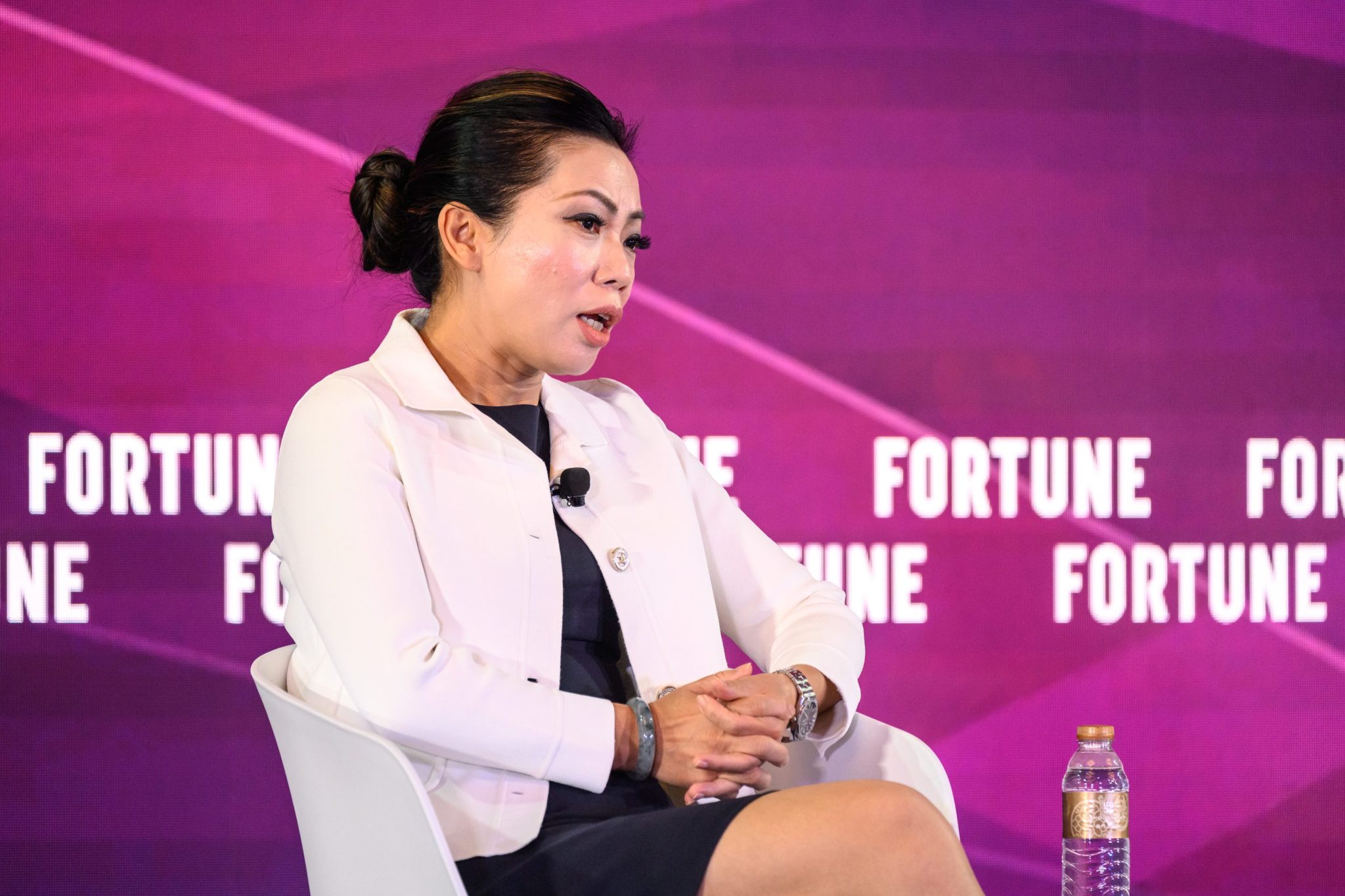
“I think AI is making people work harder actually because you have to be awake for your agents to be running,” Guo said in an interview on the Fortune Daily Show this week. “I think it was last week I worked a 26-hour day because I refused to go to sleep.”
Guo’s marathon workdays are partly due to her personal drive. Since leaving Scale AI in 2018, she has made numerous startup investments through her venture capital firm Backend Capital, including one in an unnamed company later acquired by Anthropic, that made her a “pretty large shareholder” of the AI company. She is also CEO of the creator monetization platform Passes, which she started in 2022.
Still, Guo’s opinion about AI forcing people to work harder also illustrates the paradox of incorporating AI into the workforce. Some workers, including developers, have been able to use AI to complete tasks faster. Yet, early research has found these workers are often taking on more responsibilities as well.
A study by UC Berkeley researchers of a 200-person U.S. technology company over eight months found “employees worked at a faster pace, took on a broader scope of tasks, and extended work into more hours of the day, often without being asked to do so.” There are also some questions about whether completing tasks faster always means workers produce quality work.
Still, despite Guo’s leverage of AI, she also acknowledged the power of people. She said when working for a company, and also when investing, it’s important to identify people with complementary skills. Even though she claims she was average when she was a computer science student for two years at Carnegie Mellon University, one of the top schools in the country for programming, she said she has the baseline knowledge to identify very talented engineers.
“The people in a company make the company,” she said.
Guo was working in AI well before the current generative AI boom. In 2016, she cofounded Scale AI with Alexandr Wang, now the chief AI officer at Meta, before leaving the company two years later. She retained equity that ultimately helped make her a billionaire.
Her wealth also briefly gave her another title: world’s youngest self-made woman billionaire, before she was surpassed by Kalshi cofounder Luana Lopes Lara last year.
Guo said losing the title didn’t bother her.
“I think it’s a really good sign when this title is taken away because that means that, like, women are winning,” Guo said.
This story was originally featured on Fortune.com






 English (US) ·