.png)
 1 hour ago
2
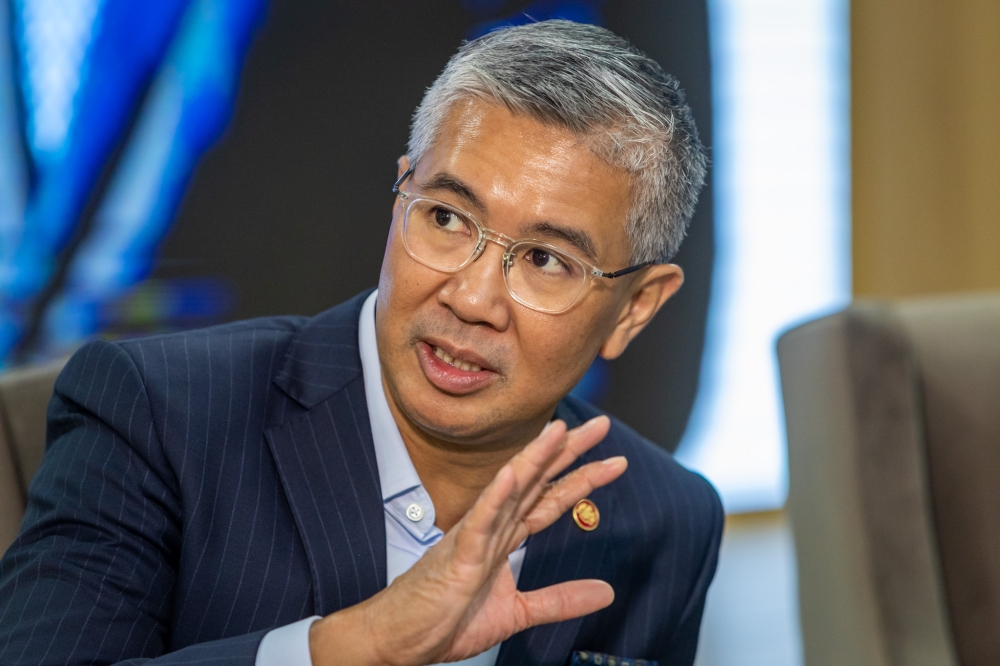
KUALA LUMPUR, Nov 1 — Sabah and Sarawak have never been sidelined in rural road development, with allocations for the two states set to nearly triple between 2023 and 2027 compared with the preceding five years, Datuk Seri Tengku Zafrul Abdul Aziz said.
The former Finance Minister and Investment, Trade and Industry Minister said rural road expenditure totalled RM3.7 billion between 2018 and 2022, compared with RM11 billion for the 2023-2027 period, including allocations for this year and next year.
He said the increase reflected the government’s commitment to rural infrastructure development, particularly in Sabah and Sarawak, which receive about half of the country’s total rural road expenditure each year.
In a social media post, Tengku Zafrul said actual expenditure on rural road development in the two states reached RM1.41 billion this year, the highest in a decade.
“Since 2023, RM4.6 billion has been spent. Each year, Sabah and Sarawak receive about half of the country’s total rural road expenditure.
“Sabah and Sarawak have not been sidelined. They have been prioritised,” said Tengku Zafrul, who is now Malaysian Investment Development Authority (MIDA) chairman and a senior political adviser to Prime Minister Datuk Seri Anwar Ibrahim.
On the deferment of several rural road projects, Tengku Zafrul said the move should be viewed in the context of national fiscal management and rising contractual commitments that had exceeded the original allocations approved by Parliament.
He said rural road expenditure had exceeded the original parliamentary allocations every year since 2022, resulting in mounting contractual commitments and outstanding payments to contractors.
The Finance Ministry (MoF), he said, had to balance the funding requirements of all ministries, including those responsible for health, education and rural development.
“When a ministry makes commitments beyond its approved allocation, the MoF has to find ways to cover the shortfall.
“In this case, the Prime Minister, in his capacity as Finance Minister, approved an additional RM500 million in expenditure for 2026, using savings from the development allocations of other ministries to settle outstanding payments to contractors,” he said.
The ministries involved included the Women, Family and Community Development Ministry, Natural Resources and Environmental Sustainability Ministry, Tourism, Arts and Culture Ministry, Agriculture and Food Security Ministry, Transport Ministry, Housing and Local Government Ministry, and Economy Ministry.
Tengku Zafrul stressed that the deferment of new contracts did not mean existing projects had been cancelled, adding that the MoF had never issued any directive to terminate them.
Instead, he said, the deferment was intended to prevent outstanding payments from mounting further and ensure the government’s financial commitments remained under control.
“Deferring new contracts does not mean existing projects have been cancelled. The MoF has never issued any directive to cancel them. New contracts have been deferred to prevent payment arrears from increasing. These are two different things,” he said.
He said prudent fiscal management required the government to consider not only whether projects had been approved, but also its ability to provide sufficient funding for their implementation.
He added that the government understood the needs of residents in many villages across Sabah and Sarawak, who were still waiting for better road access.
Against this backdrop, Budget 2027 continues to provide RM2.27 billion for rural road development, alongside RM34.9 billion for Sabah and Sarawak, the highest allocation among all states.
“Sabah and Sarawak should not be used as political capital by anyone. As the Prime Minister has stressed, allocations alone are not enough without good governance.
“What matters is that projects are implemented, contractors are paid and the people benefit. That is our priority,” he said. — Bernama







 English (US) ·