.png)
 1 hour ago
1
1 hour ago
1
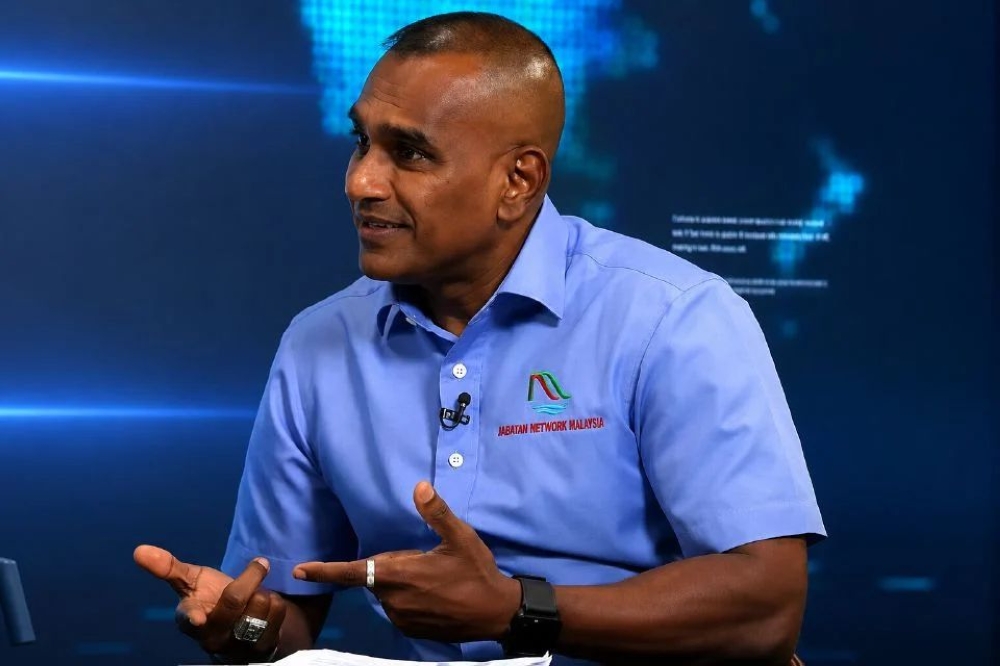
KUALA LUMPUR, Sept 22 — The Royal Malaysian Customs Department (JKDM) has been urged to issue a clear written position on the Customs treatment of two petroleum cargoes with a combined declared value exceeding RM220 million, as continued uncertainty could affect shipping agents, terminal operators, cargo owners and other participants in Malaysia’s downstream petroleum sector.
Maritime Network Sdn Bhd chief executive officer Datuk Seri R. Jeyenderan said the company was not asking JKDM to decide the matter in its favour, but to state the applicable law, procedure and documentary requirements in writing.
“This has gone beyond a private commercial disagreement. The industry needs to know whether petroleum cargo declared for transhipment under K8 may be blended or commingled in a Public Licensed Warehouse, what approvals are required, and how the declaration and duty treatment must be handled if the product changes,” he said in a statement today.
The matter concerns two Atlanta Crude Oil cargoes totalling 76,954.325 metric tonnes. The first comprised 34,903.062 tonnes carried by MT Marlin Santorini, while the second comprised 42,051.263 tonnes carried by MT Invictus.
Maritime Network said records reviewed by the company showed that the cargoes were declared under the K8 procedure and discharged into shore tanks at Dialog Terminals Langsat in Johor. The company has asked whether the K8 procedure remained appropriate after the reported blending activity and whether any change in the product’s composition, specifications or tariff classification required a different Customs declaration.
Jeyenderan said Maritime Network had pursued clarification through the proper channels since April, including meetings, formal correspondence, a detailed report submitted in late August, a meeting with officers from JKDM’s Downstream Petroleum Unit on Sept 9 and a further written request sent to the department on the same day.
“After months of emails, meetings, reports and formal letters, the continued absence of a written answer is creating avoidable regulatory uncertainty. A matter involving cargo with a declared value of more than RM220 million should not be left to verbal interpretations,” he said.
He said the latest development was a written response from the Malaysian Investment Development Authority (MIDA) dated Sept 17.
Based on MIDA’s stated understanding of the arrangement, the cargo owner or client retained ownership of the crude oil, blending components and resulting Very Low Sulphur Fuel Oil (VLSFO), while Dialog undertook the blending at its Tanjung Langsat facility and held the relevant Manufacturing Licence.
MIDA said the client was therefore regarded as a trading company and was not required to apply for a Manufacturing Licence for that activity. Crucially, MIDA advised that confirmation on whether the activity could be carried out in a Public Licensed Warehouse and whether duties applied to the process or export of VLSFO should be obtained directly from JKDM because those matters fell under Customs’ purview.
“MIDA has answered the question within its jurisdiction and has expressly identified Customs as the authority for the remaining issues. The matter cannot continue moving from one agency to another. The competent authority is now clear, and what is needed is a written Customs position,” Jeyenderan said.
He said the requested clarification should state whether K8 remained valid where crude oil declared under tariff heading HS 2709.00 was reportedly blended into VLSFO under HS 2710.19, whether K1 or another declaration was required, and what import duty, sales tax, excise duty, export duty or other tax treatment applied.
If no duty or tax was payable, JKDM should identify the relevant exemption, suspension, licence condition or other legal basis, he said.
Maritime Network also called for an industry-wide written guideline or operational standard covering liquid petroleum cargo handled under K8, including rules on blending or commingling, licensed-warehouse conditions, product identity, sampling, tariff classification, mass-balance records and the reconciliation of inbound cargo against the final outgoing export.
Jeyenderan said written guidance would protect both the authorities and the industry by ensuring that the same rules were understood and applied at every Malaysian port and terminal.
“A verbal explanation may depend on the officer present on that day. A written position creates consistency, accountability and equal opportunity. If this activity is permitted, the rules should be transparent and available to every qualified Malaysian industry player. If it is not permitted, the industry must be told clearly so that companies can comply,” he said.
He stressed that the RM220 million figure represented the combined declared value of the two cargoes and was not being presented as an estimate of lost government revenue.
“We are not alleging an offence and we are not asking Customs to prejudge any party. We are asking the authority responsible for Customs law and procedure to close the regulatory gap with a written answer supported by the applicable legal basis,” he said.
Maritime Network said it was prepared to publish or fairly summarise any substantive clarification received from JKDM and correct any factual point shown to be inaccurate.







 English (US) ·