.png)
 1 month ago
33
1 month ago
33
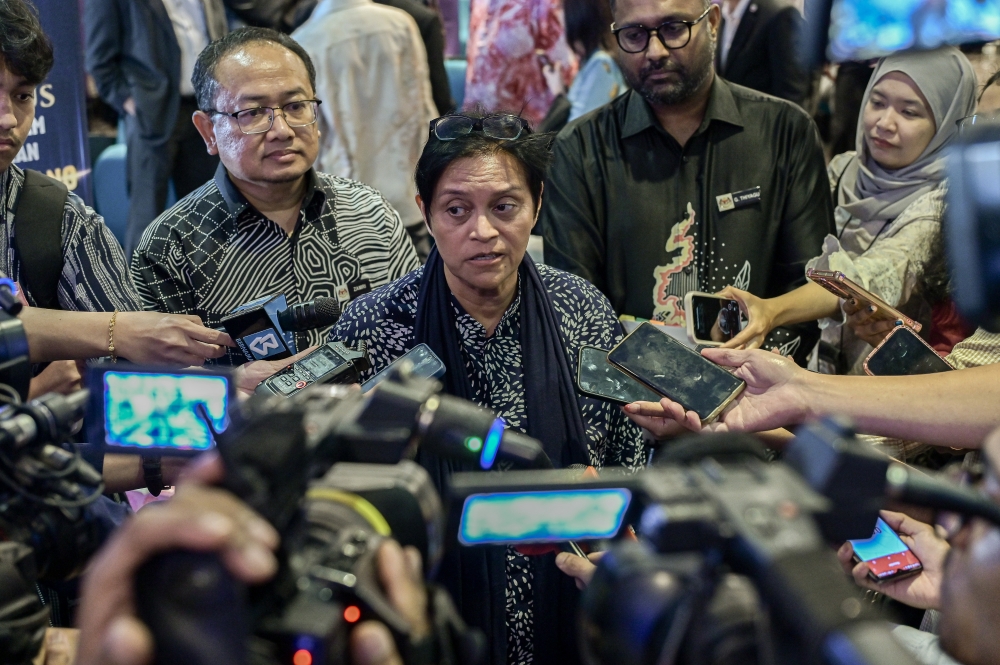
KUALA LUMPUR, Sept 3 — The Coroners Bill, aimed at clarifying the management of death cases, is expected to be tabled in Parliament next year, said Minister in the Prime Minister’s Department (Law and Institutional Reform) Datuk Seri Azalina Othman Said.
She said the bill was originally targeted for tabling this year, but with the Budget 2027 session in October, it is more suitable to bring it next year.
Azalina said drafting the law is expected to establish standard operating procedures (SOPs) and detail the roles of coroners and relevant parties in handling death cases.
“We hope that with this act, we can establish SOPs and answer questions that arise. We do not want families searching for answers when a death occurs,” she told reporters after launching the Public Opinion Survey on the Drafting of the Coroners Bill here today.
Azalina said, although procedures for death investigations exist under current legislation, the Coroners Act will complement them and offer clearer guidance on implementation.
Earlier in her speech, Azalina said specific legislation on coroners is being considered with three main goals: establishing a clear and comprehensive legal framework; creating a more structured, independent and transparent coroner system; and clarifying each party’s responsibilities when a death is reported.
“We also want a system that not only determines the cause of death but also identifies weaknesses to prevent similar tragedies from recurring.
“If a death reveals weaknesses in the system, the coroner’s findings should not end up buried in a file because the lessons learned from a case should help us protect other lives,” she said.
Azalina added that Malaysia currently has an inquest implementation framework under the Criminal Procedure Code, specifically Sections 328 to 341A, as well as Practice Direction No. 2 of 2019.
However, she said that death investigations have become more complex, involving digital evidence, forensic analysis, medical records, institutional safety, and inter-agency coordination.
Azalina said that the ongoing inquest proceedings into the death of the late Zara Qairina Mahathir serve as a reminder of the importance of evidence management, post-mortems, inter-agency coordination, and early communication with families.
She also cited the cases of the late Muhammad Adib Mohd Kassim and the late Teoh Beng Hock, as well as custodial deaths such as those of the late A. Kugan and the late S. Balamurugan, as reminders of the need for an independent, thorough, and credible process when serious questions arise surrounding a death.
She said the need for this legal reform had also been raised by the Human Rights Commission of Malaysia (SUHAKAM), the Malaysian Bar, the Tun Dzaiddin Royal Commission Report, and the Royal Commission of Inquiry into the death of Teoh Beng Hock.
“The principle is simple: justice should not depend on whether a case goes viral. Every death that must be reported deserves the same scrutiny, whether it catches nationwide attention or is mourned by a single family,” she said.
Meanwhile, Azalina said the government is examining a proposal to establish a Law Reform Commission as a permanent, dedicated, and structured mechanism to review national laws and systematically submit reform recommendations on an ongoing, independent, and evidence-based basis.
She stressed that law reform need not be ad hoc or driven solely by crises but should be executed in a planned way to ensure the national legal framework remains relevant and responsive to current social needs. — Bernama








 English (US) ·