.png)
 1 hour ago
1
1 hour ago
1
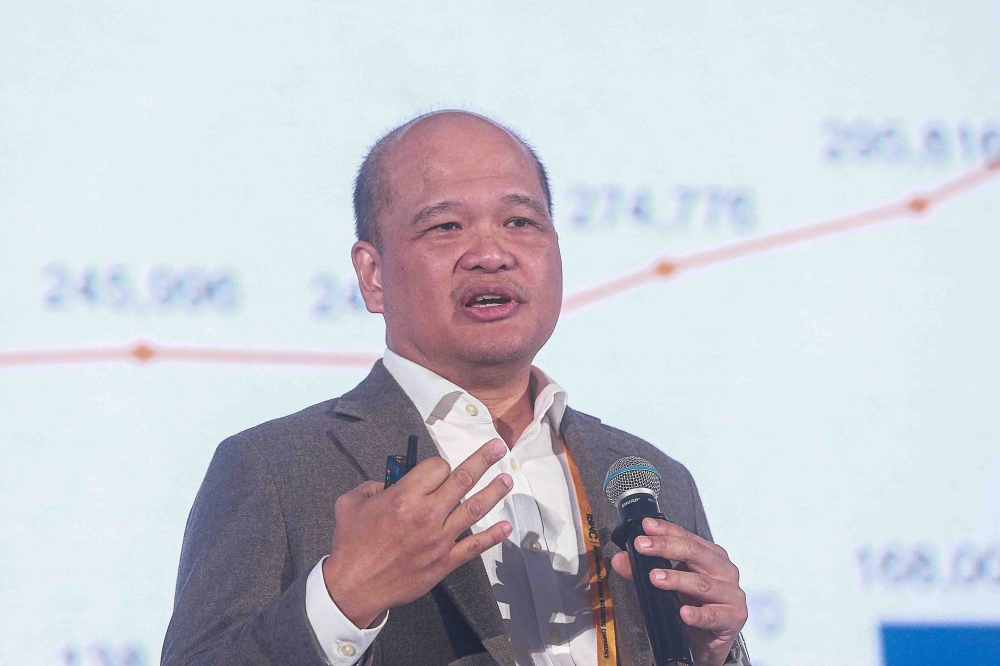
KUALA LUMPUR, Sept 30 — To help lower-salary workers save up more money for their retirement through the Employees Provident Fund (EPF), their employers could help put in more money towards their EPF savings, former EPF CEO Tan Sri Shahril Ridza Ridzuan said today.
Shahril, currently Axiata Group Berhad’s chairman, noted that Malaysia currently has one of the highest contribution rates from employees and their employers for retirement savings in EPF.
Currently in Malaysia, the law requires Malaysian employees below age 60 to contribute 11 per cent of their salary into their EPF retirement savings, while employers will have to contribute 13 per cent of the salary (if the employee’s salary is below RM5,000) or 12 per cent (if above RM5,000).
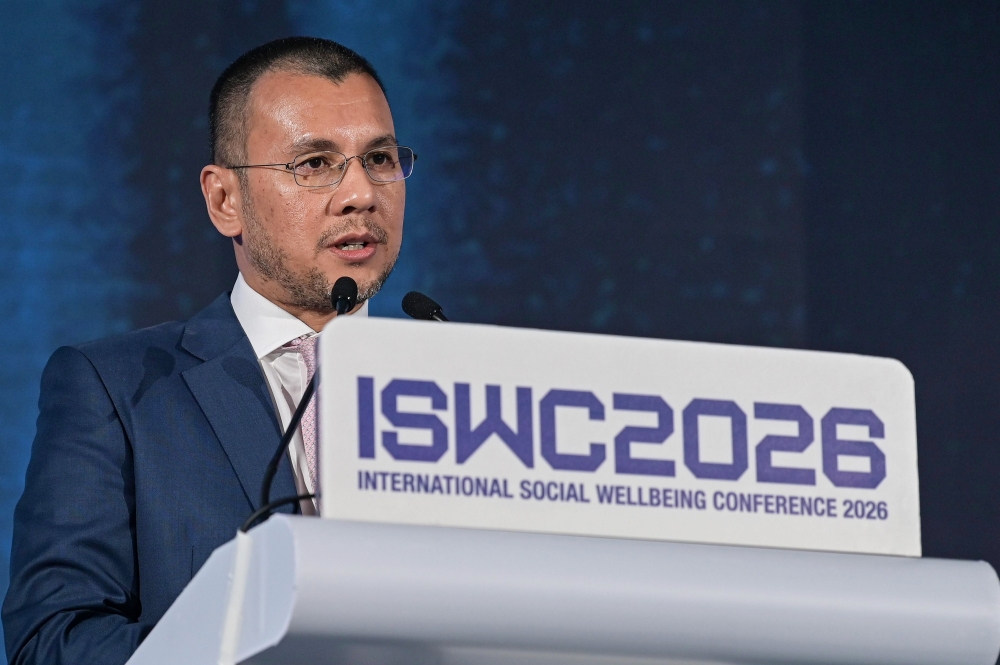
“So the contribution rate itself is not the problem. The problem has always been for the last 50, 60 years, the fact really that wages have not grown fast enough in Malaysia. So when your base is small, no matter how big your contribution rate, you are just not building your retirement savings fast enough,” he said as a speaker at EPF’s International Social Wellbeing Conference 2026 here titled “The Long Horizon”.
He commended the current federal government for its efforts on working towards having a progressive wage policy to make sure workers get a fair share of the economy: “And we need to continue that. We need to have much better progressive policies to make sure that the minimum wage keeps going up.”
Later, Shahril suggested that a progressive wage policy would not just cover workers’ income levels, and proposed that it be used to set policies on EPF contribution rates from employers.
“And I would actually propose and suggest basically that employers pay a much higher contribution rate for workers below a certain threshold, and compensated really by then having a much lower contribution rate for workers past the threshold.
“So for instance, if you are earning below RM5,000, why shouldn’t employers contribute say 15 per cent or 16 per cent to your EPF?
“That helps basically in terms of building your retirement savings. It’s progressive in the sense of basically allowing for lower-income workers to build their savings faster,” he said.
“But you can then compensate by saying, for instance, that any worker above, for instance RM10,000, employers should only contribute four per cent,” he said when giving a hypothetical example to illustrate his point.
He said this would also help to cap the amount of money that EPF manages for high-income workers, such as those who are already earning RM10,000 and if they are well on their way to achieving their financial retirement plans.
He said this would be a better method than the hypothetical method of giving different investment yields for those with lower and higher total EPF savings.
“So instead of basically differentiating between account yields for those with higher balances in EPF and lower balances, actually what you should do is to start capping this contributions of high-income earners to reduce the size of their balance sheet,” he said in giving his proposed solution.
Shahril was responding to a question on how lower-income workers and informal workers can also achieve a dignified retirement through their retirement savings.
Earlier during his session, Shahril said he believed that having differentiated yields for EPF accounts will never be the right solution, as the EPF base is too big in terms of the number of EPF contributors it has.
He also said introducing differentiated yields on EPF accounts would carry a “very high risk” of outflow of funds from top EPF account holders.
He said this hypothetical scenario leading to funds outflow would be bad for all EPF members, as part of the reason for EPF’s success is that a bigger Assets Under Management (AUM) or total assets managed would translate to lower cost for all.
Shahril said the actual debate should be about improving wealth inequality in Malaysia and a better transfer of wealth between capital owners and workers: “So the fight is not really about between whether you are high-wage earner or whether you are low-wage earner. It’s really between, are you an owner of capital and business, and whether you are essentially paying a fair share to the state in order to support these policies.”
Gig workers
As for gig workers, Shahril said they face an “invisible tax” as gig platforms do not contribute to EPF savings towards those working on their platforms, which means the platforms have a lower operating cost and can then outcompete traditional brick-and-mortar businesses and Mom-and-Pop stores.
He proposed that a revenue tax be imposed on gig platforms, and that the money raised from this tax could then be used to provide for EPF contributions for gig workers.
“So I think there are ways of doing it right? It’s just a matter of being creative around understanding the maths and understanding how to push those boundaries for the betterment of those workers and those gig workers who are probably under-covered at this point in time,” he said.







 English (US) ·