.png)
 1 hour ago
3
1 hour ago
3
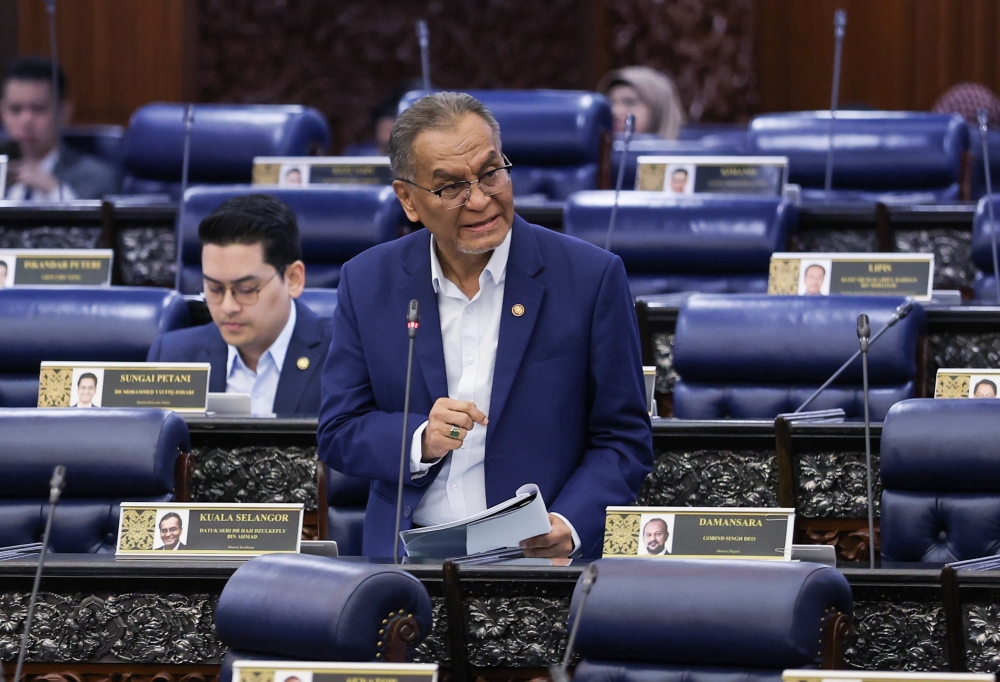
KUALA LUMPUR, Oct 8 — The government has proposed expanding the powers of the Director-General of Health to publish information on food that does not comply with the Food Act 1983 (Act 281) or regulations made under it, without a court order.
Health Minister Datuk Seri Dr Dzulkefly Ahmad said the proposal under the Food (Amendment) Bill 2026 would allow such information to be published through print or electronic media in the interest of public safety.
“The existing provisions under Act 281 are no longer adequate to address current food safety challenges and protect public health,” he said when tabling the bill for second reading in the Dewan Rakyat today.
He said the 39-clause bill also proposed amendments to Section 12 of Act 281 to allow convictions under the act to be published through print or electronic media.
In addition, he said a new Section 11A was proposed to expand the powers of the Director-General of Health to close premises that prepare or sell food containing substances injurious to health.
Dzulkefly said the amendments would also strengthen enforcement by expanding the powers of authorised officers to conduct investigations, in addition to their existing inspection powers.
He said the officers would also be given access to recorded information, computerised data and digital data to enable thorough investigations to be conducted in line with the development of transactions made online.
He added the amendments would also empower officers to obtain information on food advertising and inspect books, documents or records at relevant premises, including premises involved in producing food advertisements.
On consumer safety, Dzulkefly said the bill would strengthen controls over food contact materials, including making it an offence to prepare or sell materials that contain, or can transfer, poisonous or hazardous substances.
“Operators will also be required to immediately recall, remove or withdraw from sale any food contact materials if they know or have reason to believe that the materials contravene the provisions of Act 281,” he said.
He said the government proposed increasing the fines and maximum prison terms, including a penalty of up to RM25,000 or imprisonment for a maximum of five years, or both, for offences against regulations made under the act.
To strengthen controls on imported food, he said the bill proposed that food brought into Malaysia by land, sea or air in excess of the prescribed limit be deemed to be intended for sale unless proven otherwise.
Dzulkefly said on-site verification of overseas food facilities could also be carried out following prior consultation with the exporting country to ensure that only safe imported food is allowed to enter Malaysia.
Meanwhile, he said the food safety challenges faced by the government included chemical contamination caused by the misuse of pesticide and antibiotic residues, excessive use of food additives, as well as the emergence of new chemicals and pathogens.
He said Act 281 had never undergone a comprehensive review since it was gazetted in 1983, although it had been amended three times, in 2001, 2006 and 2024, involving specific provisions and consequential amendments arising from the enactment of other laws.
He added that engagement sessions with various stakeholders had been held from 2023 to 2026, in addition to public consultations and notification to the World Trade Organisation (WTO) to obtain feedback on the proposed amendments. — Bernama







 English (US) ·